NASDAQ: SETC  |  +2.34 (1.18%)  ▲ Headquarters: Houston, TX  |  Founded 2011  |  4,800+ Employees

SpaceX  ·  SpaceXAI  ·  X  ·  Starlink  ·  Neuralink

The Company That
Changed Everything

$1.75 trillion valuation. 400+ Falcon 9 flights. Starship in active testing. Grok-4 deployed on 220,000-GPU Colossus. $75B IPO pending on NASDAQ: SPCX. The largest merger in corporate history — and we’re just getting started.

0Falcon 9 Flights
0Starlink Satellites Active
0Colossus GPUs (Thousands)
02025 Revenue (USD Billions)

Redefining What's Possible
in Aerospace

Founded in 2011, Space Exploration Technologies Co. is a privately held aerospace manufacturer and space transportation company headquartered in Houston, Texas. Our mission is to reduce the cost of space access and enable the long-term colonization of other planets.

Our Vision

Establishing a self-sustaining human presence on multiple planets within our solar system, ensuring the long-term survival of humanity.
Our Mission

Design, manufacture, and launch advanced rockets and spacecraft with rapid reusability, dramatically reducing the cost of access to space.
Our Research

Pioneering breakthroughs in propulsion, life support systems, orbital mechanics, and autonomous spacecraft navigation.
The Fleet That Rewrote
the Rules of Space

Four rockets. More payload to orbit at lower cost per kilogram than any vehicles in history. Every first stage recovered and reflown.

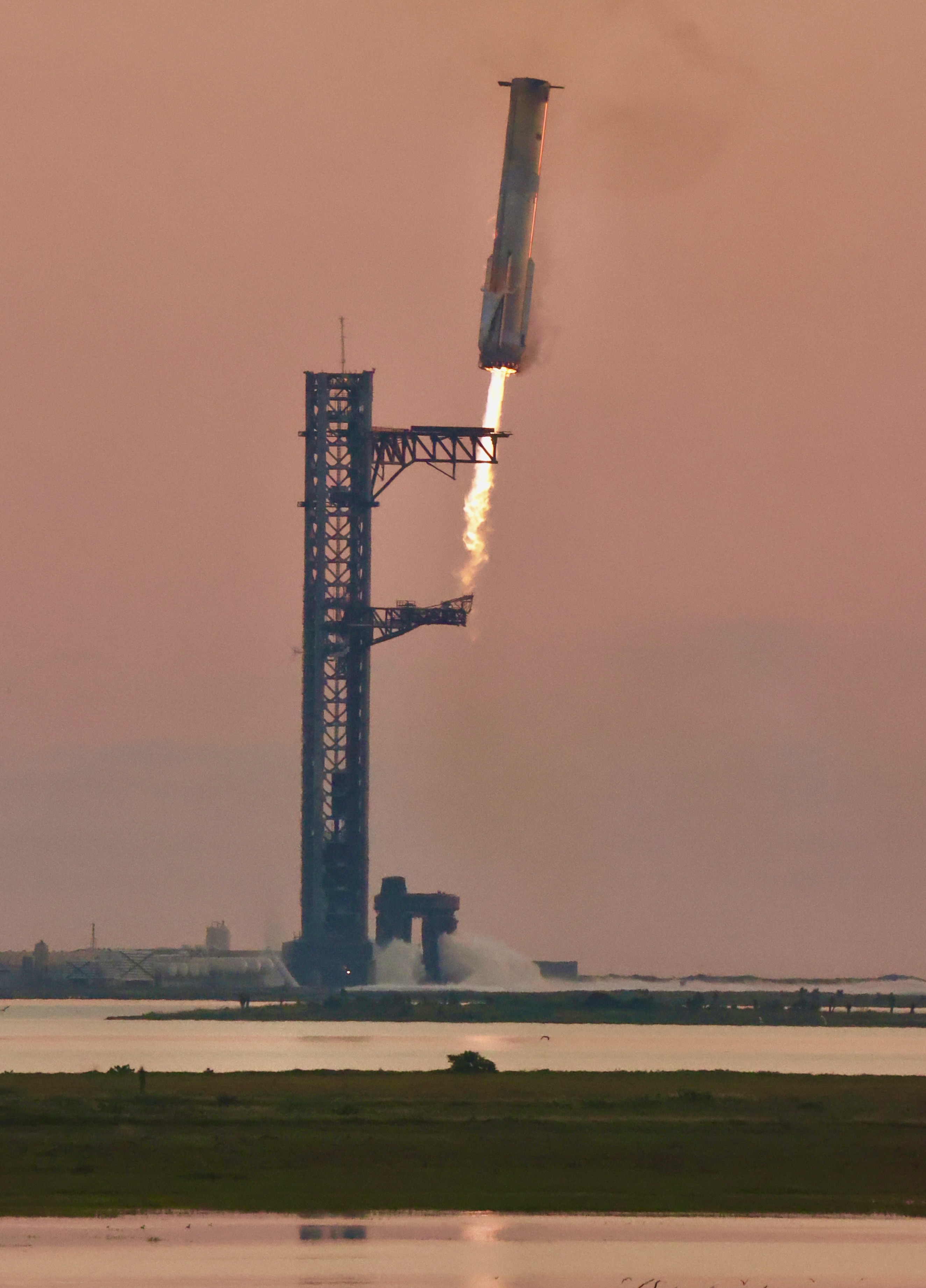
Starship Super Heavy booster returning to Mechazilla catch — IFT-5, October 13 2024
FLIGHT TESTING
01

Starship

The most powerful rocket ever built — by a factor of two.

122 meters tall. 33 Raptor engines burning liquid methane and liquid oxygen. More than 150 tonnes to low Earth orbit fully reusable — 250 tonnes in expendable configuration. SpaceX has invested $15B+ developing the vehicle that will take crews to Mars, supply NASA’s Artemis lunar base, and eventually carry 100+ passengers on point-to-point Earth routes. Integrated Flight Test 9 flew May 2026. IFT-10 targeting June 2026.

Height (full stack)122 m
Liftoff thrust74.4 MN  ·  33 × Raptor 3
Payload to LEO>150 t reusable  /  250 t expendable
PropellantLOX / Liquid Methane (Methalox)
Development investment$15B+ (ongoing through 2026)
Current statusIFT-9 complete  ·  IFT-10 targeting June 2026
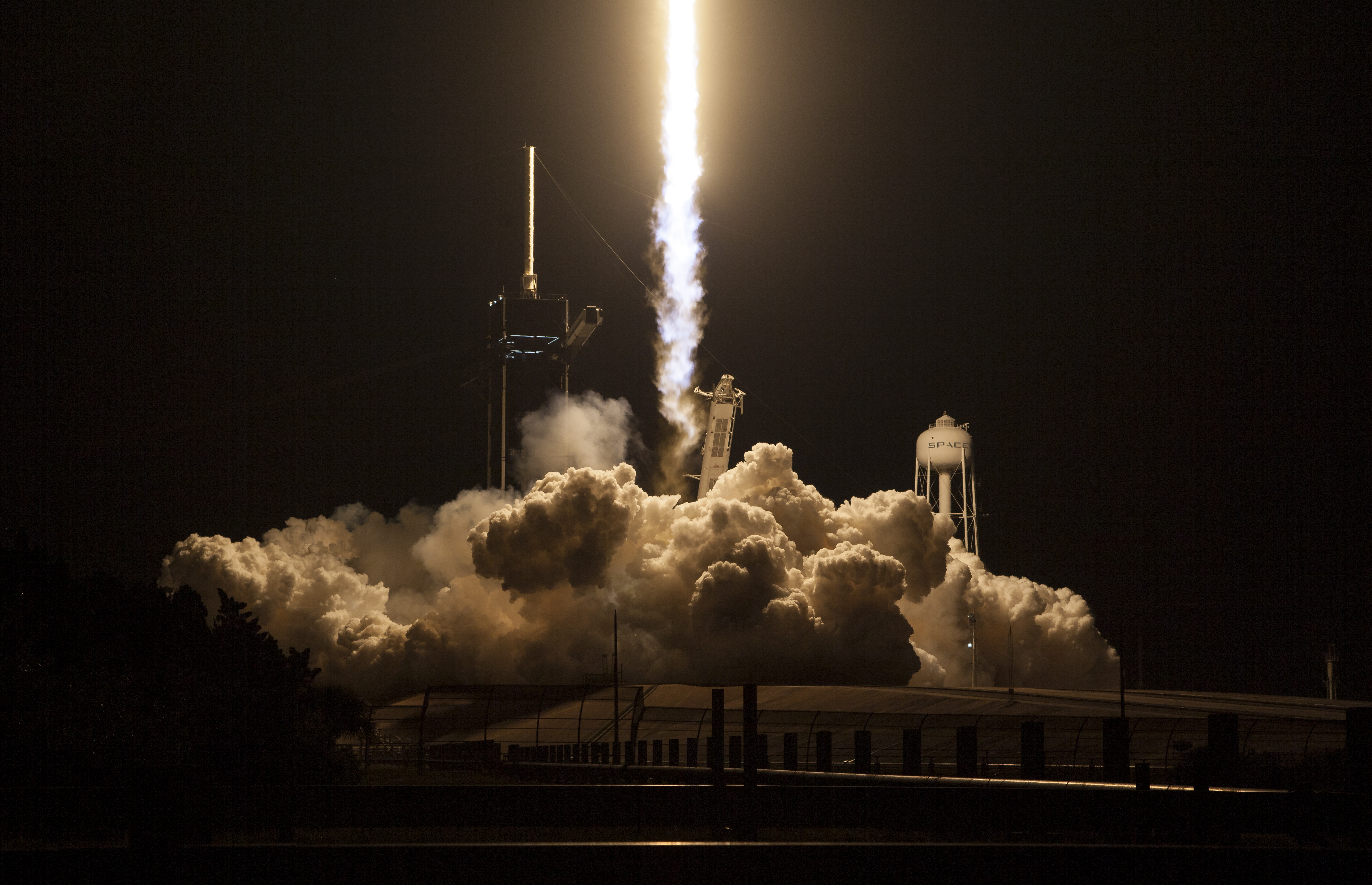
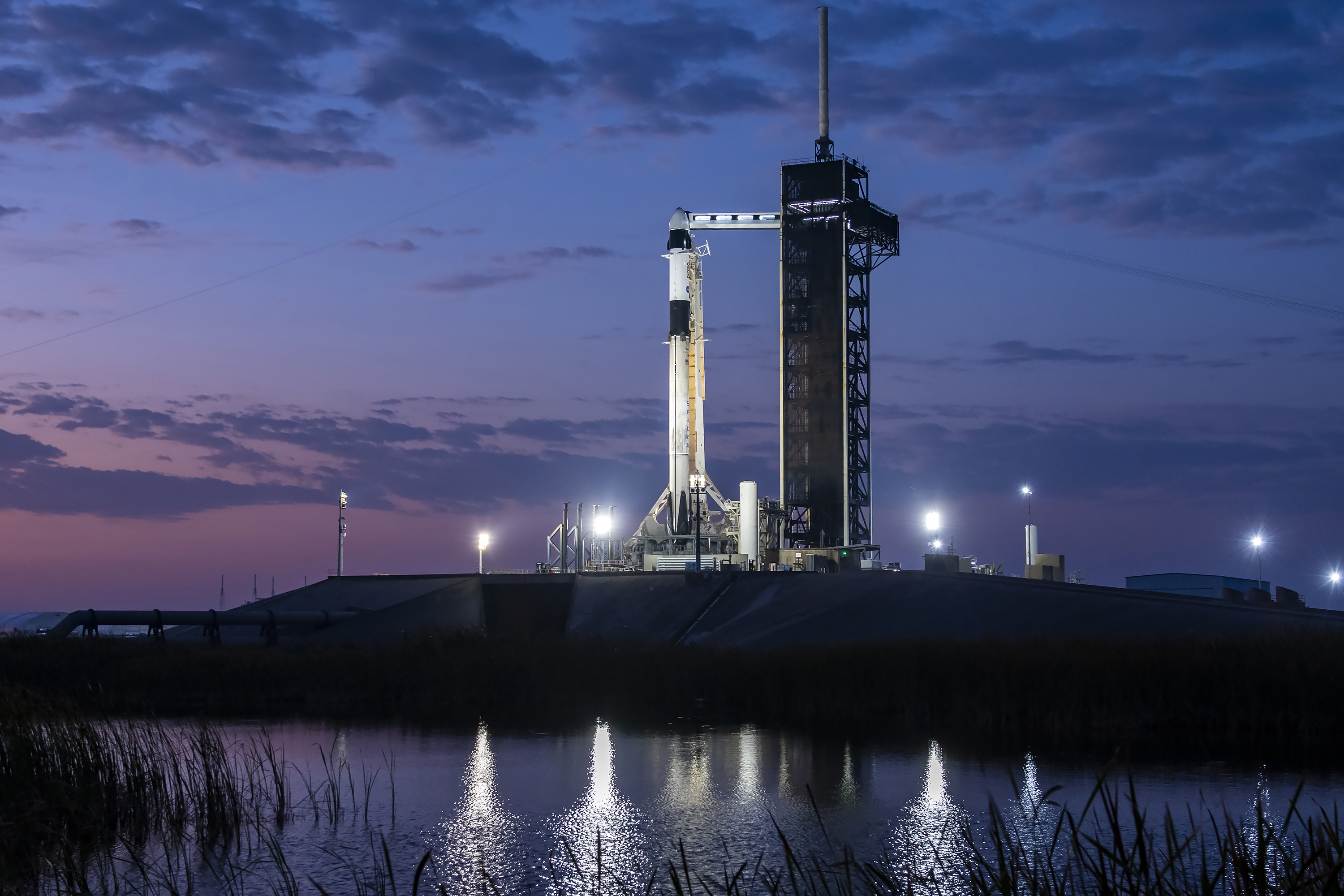
Falcon 9 night launch — Crew Dragon Demo-2, May 30 2020 (NASA) OPERATIONAL
02

Falcon 9

Earth’s most reliable orbital rocket.

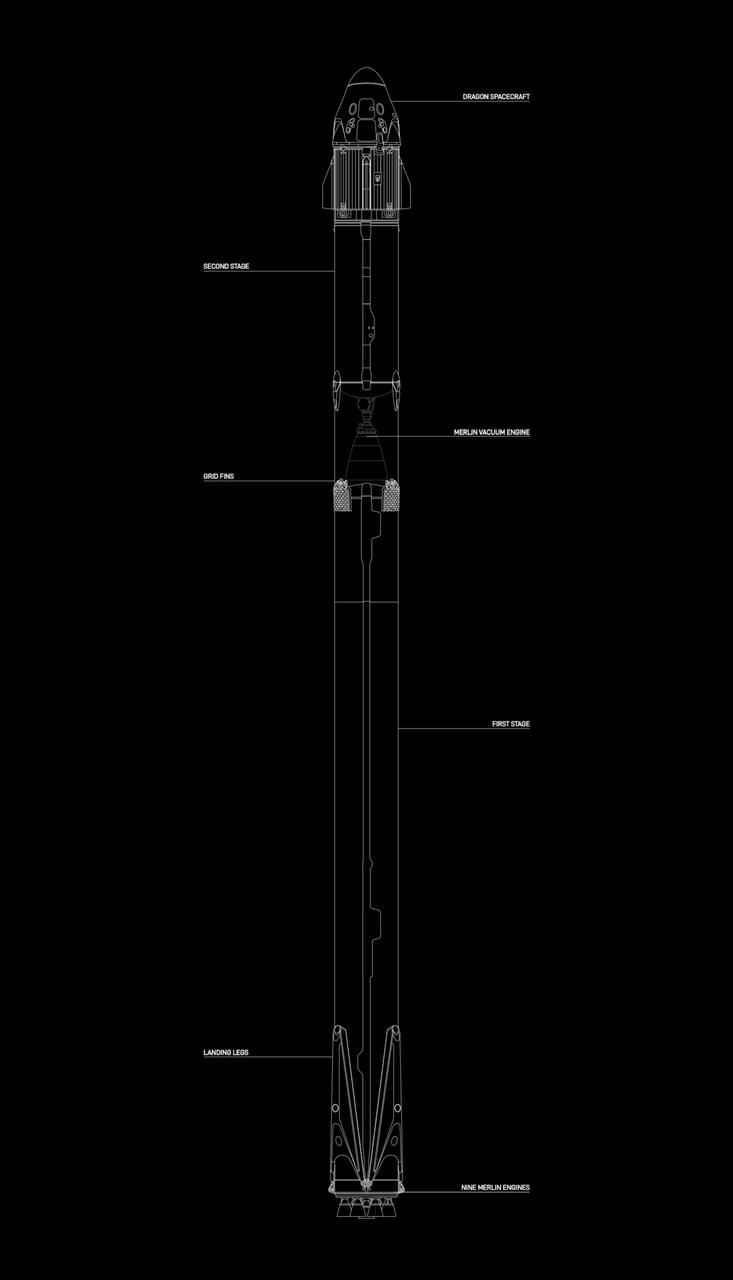
400+ consecutive successful flights. First-stage boosters recovered and relaunched up to 23 times each. First rocket ever to land an orbital-class booster. The vehicle that ended American dependence on Russian Soyuz for crewed spaceflight.

22,800 kgto LEO
9 × Merlin1D engines
70 mtall
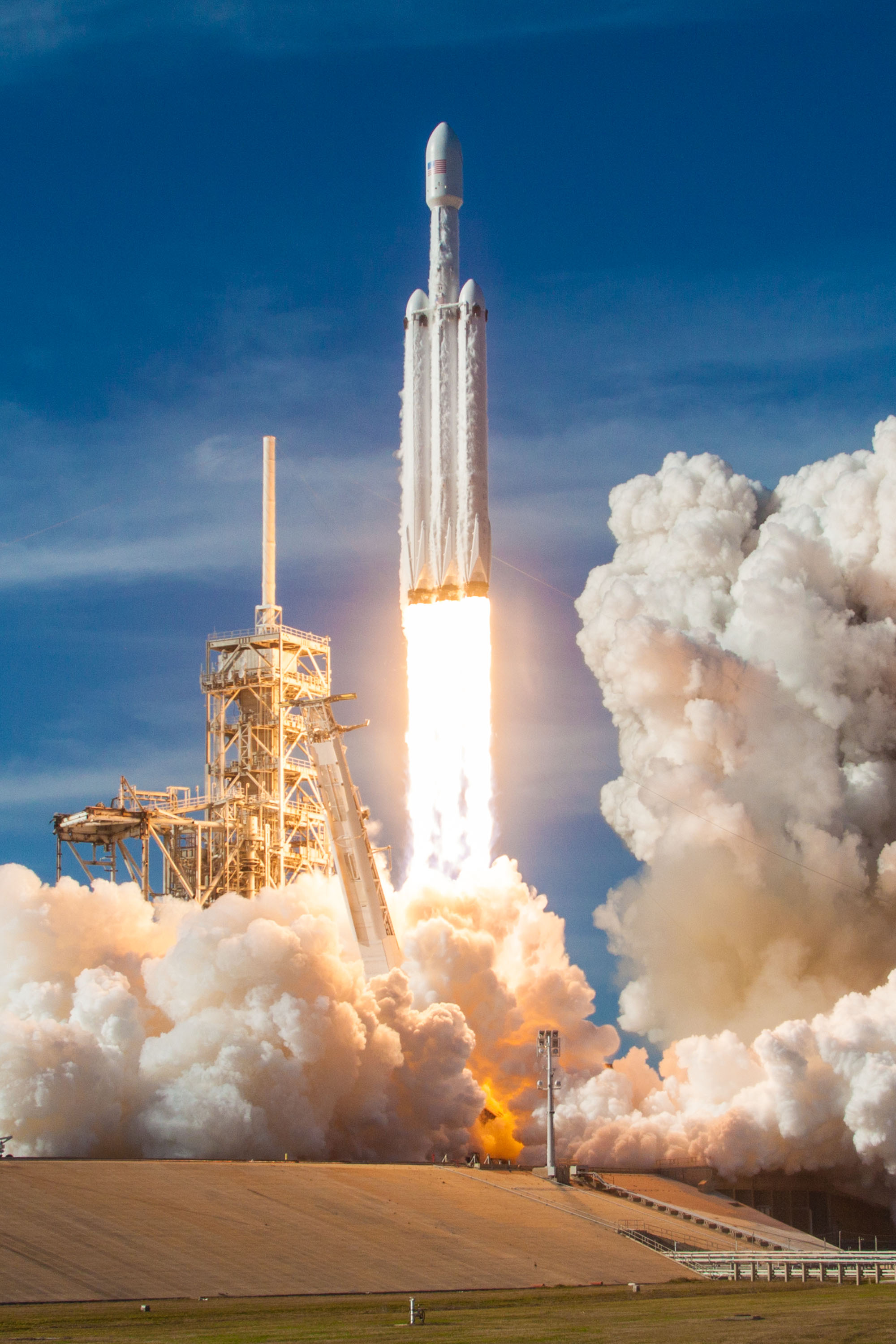
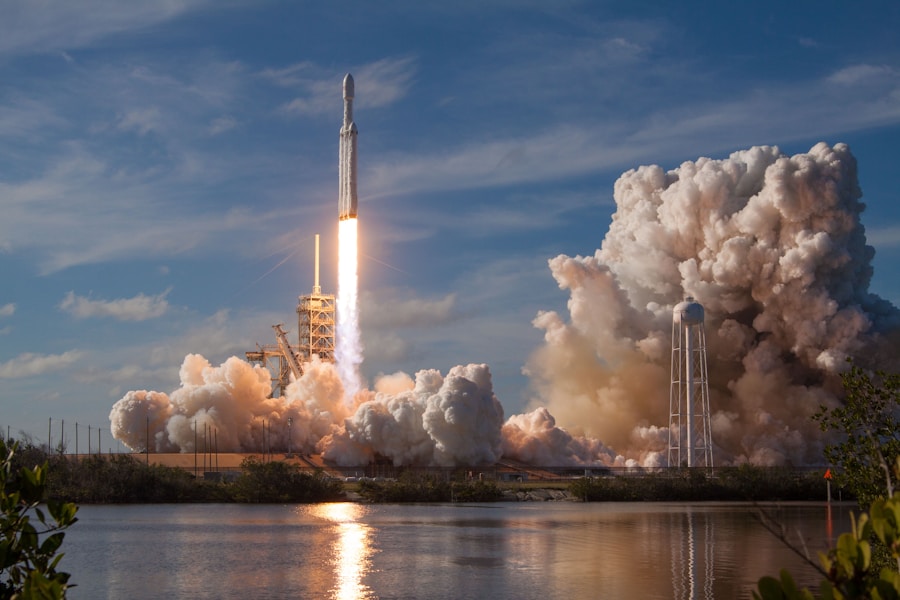
Falcon Heavy test flight launch — February 6 2018 OPERATIONAL
03

Falcon Heavy

The world’s most powerful operational rocket.

Three Falcon 9 first stages strapped together. 27 Merlin engines. All three cores recovered and reused. Capable of delivering payloads to geostationary transfer orbit, the Moon, Mars, and beyond. Used by the U.S. Space Force, NASA, and commercial operators.

63,800 kgto LEO
27 × Merlinengines
3 coresrecovered
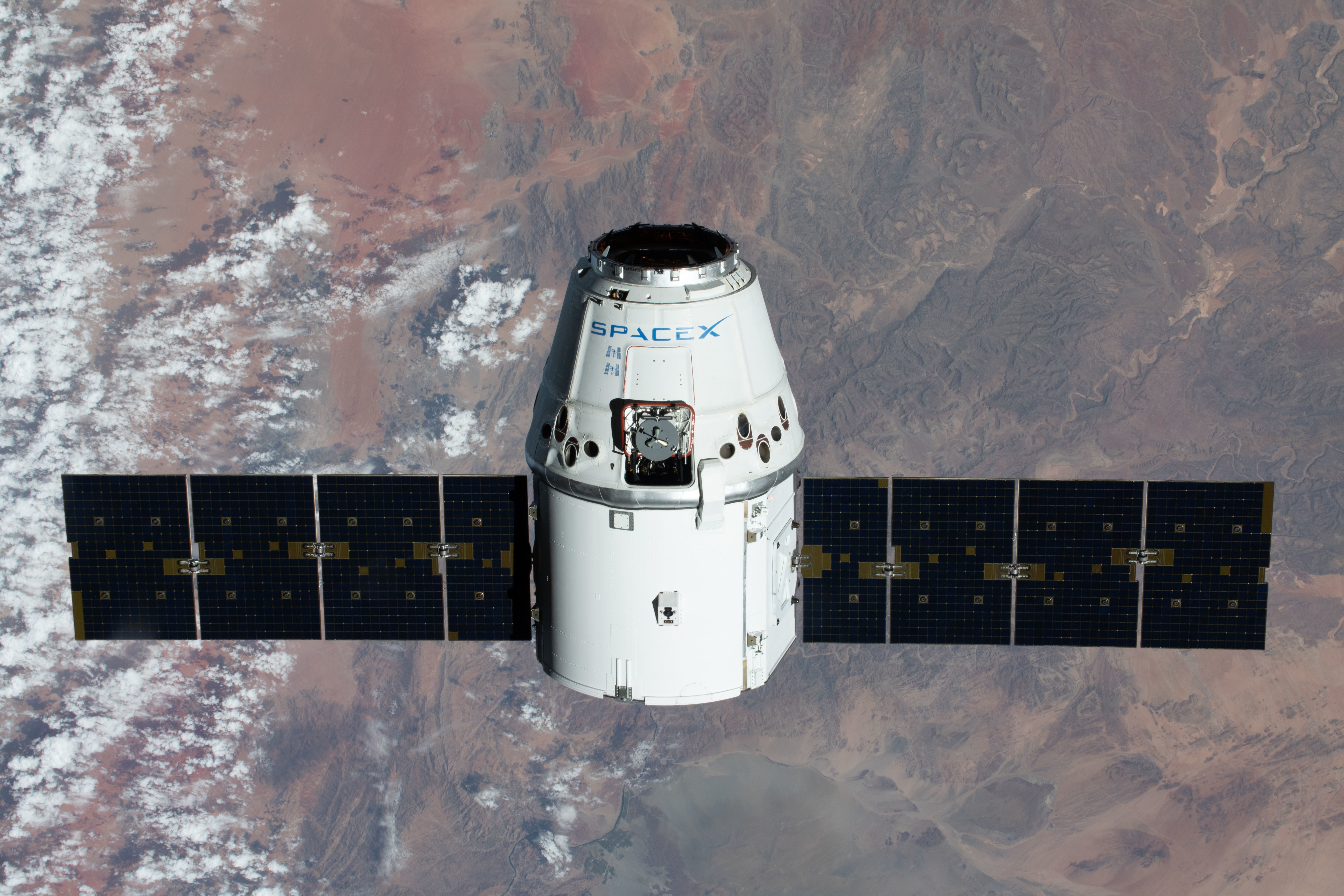
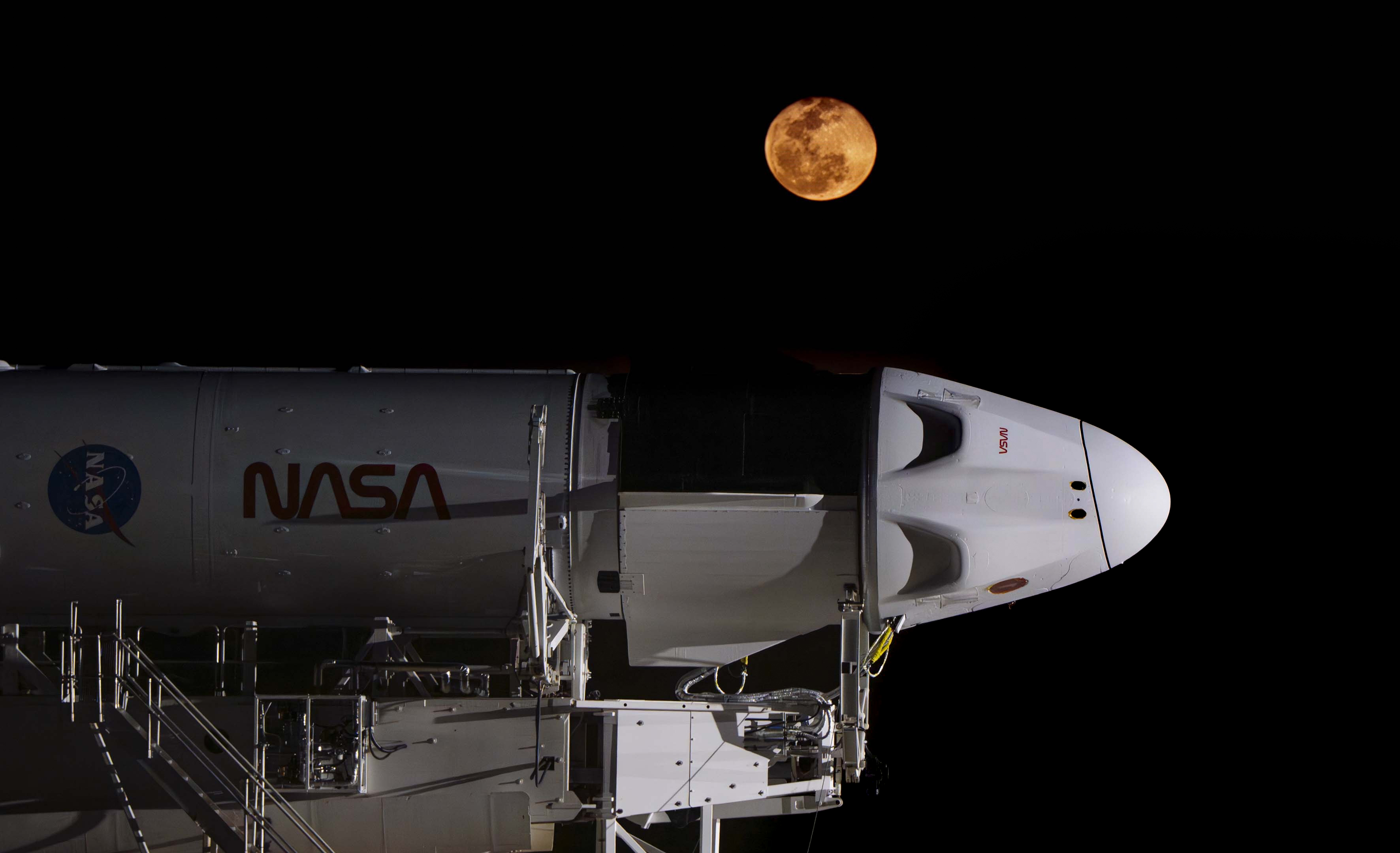
Crew Dragon 2 docked at the ISS (NASA) CREW & CARGO
04

Dragon

America’s human spaceflight vehicle.

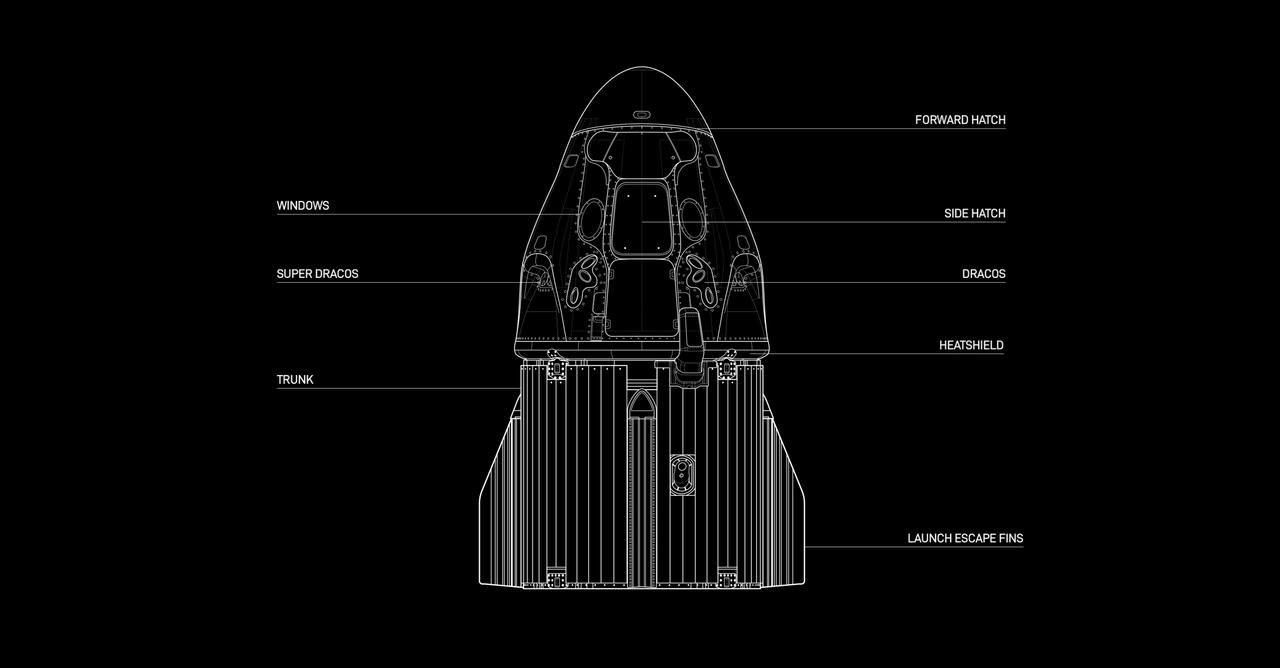
Crew Dragon carries up to 7 astronauts to the International Space Station. The first commercially-built crewed spacecraft in history. Cargo Dragon resupplies ISS with 6,000 kg of pressurized cargo. SpaceX has now completed 10+ crewed missions — more than any other operator.

7crew seats
6,000 kgcargo capacity
10+crewed missions

The AI Empire Inside
the Space Empire

In February 2026, SpaceX acquired xAI in an all-stock transaction valuing the combined entity at $1.25 trillion — the largest merger in corporate history. Grok, X, Colossus, and Cursor now operate under a single roof.

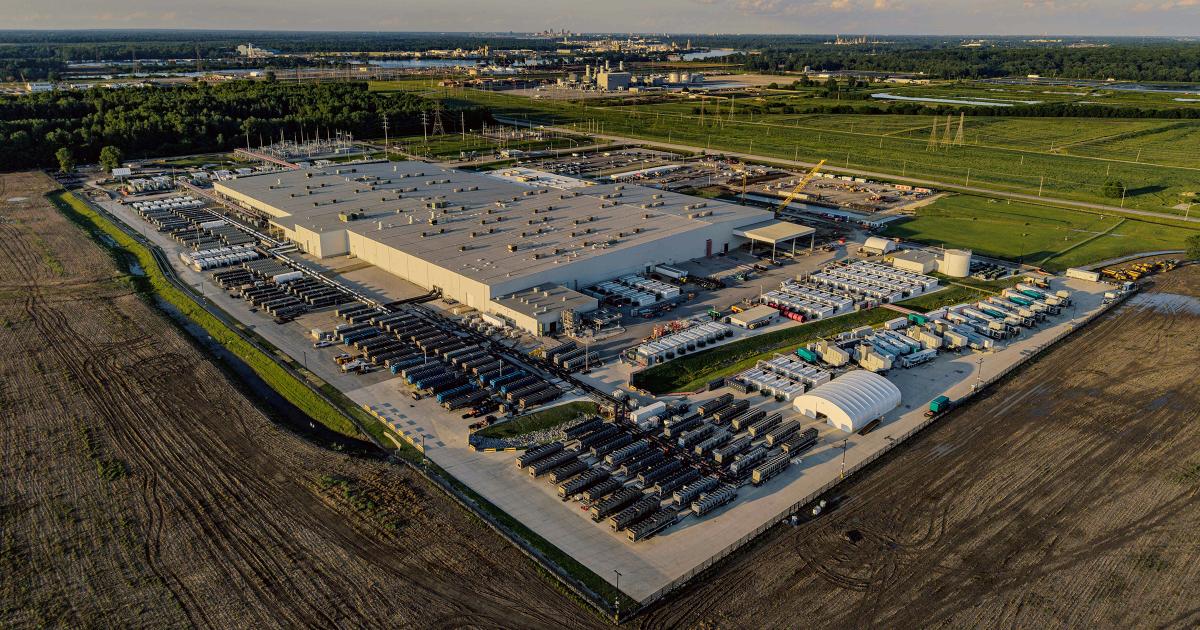
Colossus — NVIDIA GPU server cluster WORLD RECORD

Colossus 1 & 2

The most powerful AI supercomputer cluster on Earth.

Built in Memphis, TN in record time. Colossus 1 houses 220,000+ NVIDIA GPUs including H100, H200, and GB200 NVL72 accelerators. Colossus 2 spans a second site in Mississippi. Combined compute: over 1 gigawatt. Anthropic has contracted $1.25 billion per month ($15B/year) for access through May 2029 to power Claude Pro and Claude Max. SpaceX plans to expand to 1 million GPUs.

220,000+NVIDIA GPUs
$15B/yrAnthropic contract
1 GWCombined compute
Cursor — AI code editor $60B PENDING

Cursor (Anysphere)

The AI coding tool used by 67% of the Fortune 500.

On April 21, 2026, SpaceX secured an option to acquire Cursor for $60 billion — or pay $10 billion for a partnership — with a $10 billion breakup fee. Cursor has 1M+ paying customers, $1B annualized revenue, and is the fastest-growing software startup in history. The deal is expected to close ~30 days after the SpaceX IPO. Cursor plans to train its next model from scratch on Colossus 2. Two Cursor engineering leads, Andrew Milich and Jason Ginsberg, have already joined SpaceX.

$60BAcquisition option
1M+Paying customers
$1B/yrAnnualized revenue
X Platform — social media X CORP

X Platform

The digital public square — now fully integrated with Grok.

xAI acquired X Corp. on March 28, 2025 in an all-stock transaction valuing X at $33 billion ($45B including debt). The combined entity, X.AI Holdings Corp., was then folded into SpaceX in the February 2026 merger. X now serves as the primary distribution surface for Grok, with Grok Build, Grokipedia, and real-time search deeply integrated into the platform used by hundreds of millions of users daily.

$45BAcquisition value
Grok-nativeAI integration
GrokipediaLaunched Oct 2025

Upcoming Launch Schedule

Live countdowns to next launches from Starbase TX, Cape Canaveral FL, and Vandenberg SFB CA. All times UTC.

Falcon 9 — Starlink 16-1SLC-40, Cape Canaveral, FL
--DAYS
:
--HRS
:
--MIN
:
--SEC

23 Starlink V3 satellites to 530 km Shell 1 orbit. Booster B1087 on its 14th flight. Drone ship recovery “A Shortfall of Gravitas” deployed ~650 km downrange.

Falcon 9StarlinkASOG
Falcon 9 — Crew-11LC-39A, Kennedy Space Center, FL
--DAYS
:
--HRS
:
--MIN
:
--SEC

Commercial Crew Program Mission 11 to the International Space Station. 4-person crew, ~6-month ISS rotation. Dragon C211 on its 4th flight. NASA Commercial Crew Program.

Falcon 9Crew DragonNASAISS
Falcon Heavy — USSF-67LC-39A, Kennedy Space Center, FL
--DAYS
:
--HRS
:
--MIN
:
--SEC

U.S. Space Force USSF-67 mission. Falcon Heavy in fully-expendable configuration delivering classified national security payload to geosynchronous orbit. Expended center core.

Falcon HeavyUSSFGEONational Security
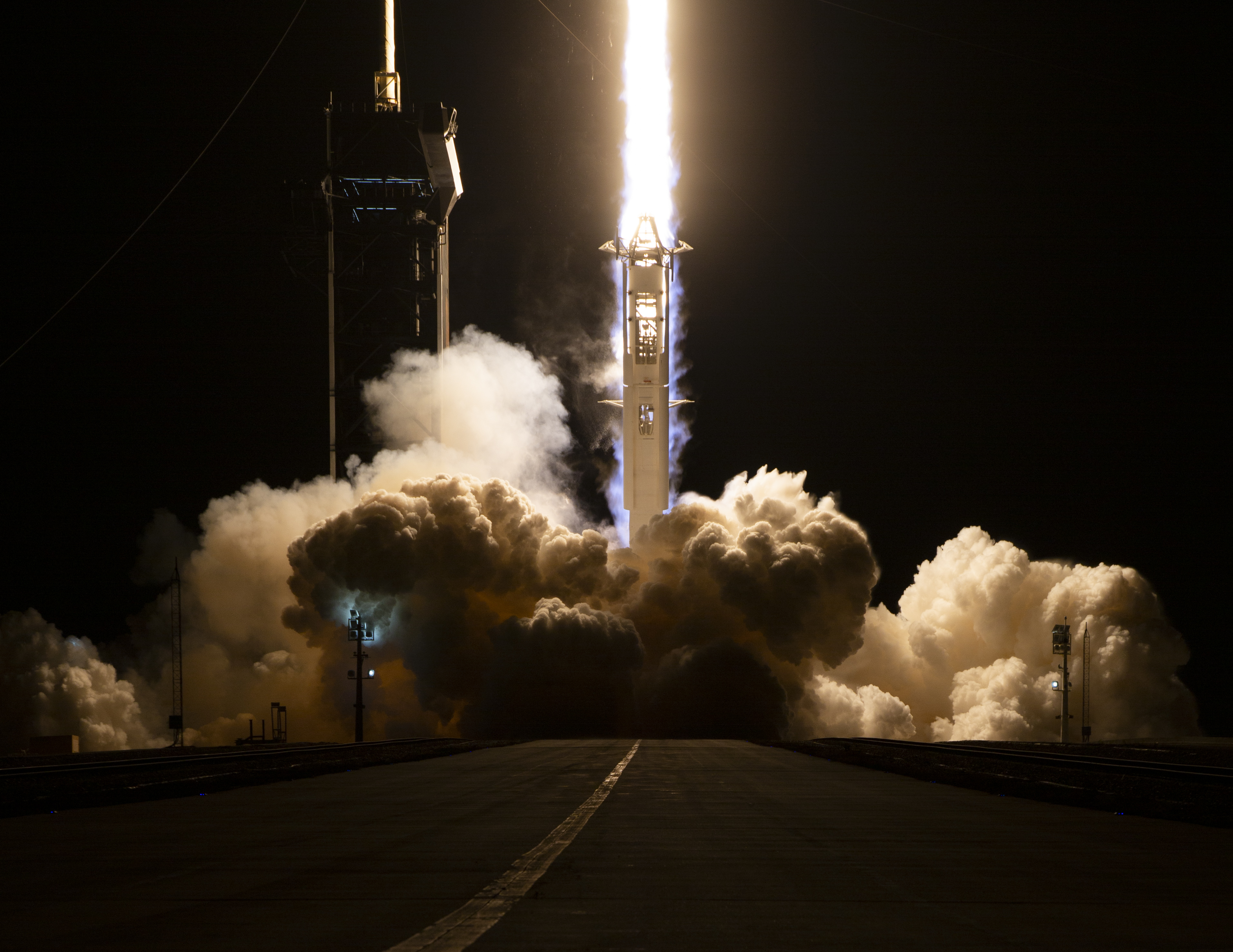
Rocket on launch pad

Deep-Space Compute Architecture Program  ·  Technical Memorandum Series  ·  April 2026

HERALD & AXIOM
Architecture Overview

A five-paper technical program addressing semiconductor reliability, constitutional AI governance, and self-replication systems for century-scale autonomous deep-space operation.

Paper III

HERALD

High-efficiency rad-hardened attitude localisation & decision compute co-design — integrating orbital attitude control directly with the ML scheduling layer to eliminate Earth round-trip latency dependencies.

ArchitectureAttitude-Compute Co-Design
Operating range−196°C to +120°C
Rad tolerance≥ 300 krad TID
InterconnectCNT critical-path bundle
MTTF target> 10⁸ hr (100-year mission)
Power envelope< 4 W operational burst
Paper IV

AXIOM

A three-layer constitutional AI governance system providing formally-verified autonomous decision-making across century-scale mission durations — with TIO protection physically enforced in read-only silicon unreachable by the reasoning layer.

Layer 1 (ROM)Hmin = 6.6 bits  ·  Nthr = 30
Layer 2TMR entropy-floor projection (formally verified)
Layer 3LLM-class adaptive Bayesian reasoning
Formal specTLA+ temporal logic (Safety + Liveness)
RedundancyTriple-modular · Merkle-hash verified
TIO protectionStrict guarantee — all event classes
Semiconductor interconnect architecture

Critical-path interconnect layer — CNT bundle replacement for copper in deep-space compute hardware

Carbon Nanotube Interconnects & the Γcoupling Model

Standard reliability models — Black’s equation for electromigration and Coffin-Manson for thermomechanical fatigue — are non-conservative by 1–3 orders of magnitude in deep space. These mechanisms are synergistically coupled: radiation-induced vacancy supersaturation lowers electromigration activation energy, while void growth nucleates fatigue cracks that expose fresh copper to accelerated diffusion.

Our Γcoupling model captures this cascade. Copper interconnects reach 50% MTTF reduction within 50 years — invisible to all currently-used reliability tools. CNT critical-path replacement reduces Γcoupling by ~10&sup6; and extends MTTF to century-scale.

~10&sup6;×Γcoupling reduction vs. copper
100 yrExtended MTTF projection
>10&sup9; A/cm²Current density tolerance
4 K nativeDeep-space cryo operation

Reliability Model Comparison — Copper vs. CNT (50-year deep-space mission)

Failure MechanismCopper (50 yr)CNT BundleCurrent Model Coverage
Electromigration (Black’s Eq.) ~10&sup5; hr MTTF degradation >10¹⁰ hr projected Non-conservative 1–2 orders
Thermomechanical Fatigue (Coffin-Manson) ~10&sup4; hr @ ΔT = 150°C >10¹⁰ hr projected Non-conservative 1–2 orders
Radiation Displacement Damage Accelerated void nucleation Near-zero vacancy supersaturation Absent from Black’s Eq.
Γcoupling — Synergistic Cascade 50% MTTF loss at year 50 ~10&sup6;× reduction (CNT) Absent from all current tools

Mission Timeline

From ground-based reliability validation to century-scale autonomous deep-space operation and civilization-seed deployment.

2024–2026

Phase I — Architecture Definition

Publication of five-paper Deep-Space Compute Architecture Program. Γcoupling model derivation. HERALD co-design specification. AXIOM constitutional governance formalized in TLA+. CNT measurement protocol finalized.

HERALDAXIOMTLA+ SpecPaper Series
2026–2028

Phase II — Γcoupling Measurement Campaign

Experimental measurement of Γcoupling to ±10% confidence using combined accelerated life test infrastructure applying electromigration, thermomechanical, and radiation loading simultaneously. Copper vs. CNT qualification dataset generation.

Reliability TestingCNT QualificationCombined Loading
2028–2031

Phase III — HERALD Tapeout & AXIOM Layer 2 Formal Verification

First HERALD silicon tapeout with CNT critical-path interconnects. Formal verification of AXIOM Layer 2 entropy-floor firmware using Isabelle/HOL theorem prover. TMR redundancy qualification under simulated GCR spectrum at 10&sup8;–10¹⁰ particles/cm²/yr.

Silicon TapeoutIsabelle/HOLTMR Qualification
2031–2035

Phase IV — LEO Validation Mission (SXT-V01)

Deploy integrated HERALD+AXIOM stack on LEO validation platform. Accumulate Nthreshold independent observations across diverse radiation environments. Real-time comparison of Γcoupling predictions against live hardware telemetry. Pioneer token structure operationally validated.

SXT-V01LEO DeploymentLive TelemetryPioneer Token
2035–2040

Phase V — Deep-Space Qualification & Fab Self-Replication

Deploy self-replicating fab prototype beyond lunar orbit. First lasercomm design pipeline transmission test — Earth-to-ship chip design uplink at operational distance. AXIOM Pioneer veto token live. Level 1 fab self-replication achieved. ISRU feedstock processing initiated.

CislunarLasercomm PipelineLevel 1 FabISRU
2040–2050

Phase VI — Full Architecture Deployment

First civilization seed ship deployment with complete HERALD-AXIOM-self-replicating-fab stack. Genetic library integration (50,000–200,000 donor genomes, triple-redundant cryogenic storage). Pioneer Program crew selection. Target: outer solar system waystation. Level 3 fab self-replication achieved.

Civilization SeedPioneer ProgramGenetic LibraryLevel 3 Fab
2050–2150

Phase VII — Century-Scale Autonomous Operation

AXIOM constitutional governance operational without Earth oversight. Lasercomm design pipeline delivering successive technology generations to deployed ships. Evolutionary chip design system producing architectures beyond current Earth baseline. Colony establishment sequence initiated at target body.

AutonomousTech Transfer100-Year MissionColony Bootstrap

Executive Team

Experienced operators, engineers, and scientists committed to advancing the frontiers of space exploration.

JM

Dr. James Mercer

Chief Executive Officer

Former NASA Deputy Administrator. Ph.D. Aerospace Engineering, MIT. 30+ years in government and commercial spaceflight.

SR

Dr. Sarah Rhodes

Chief Technology Officer

Former JPL Principal Engineer. Led propulsion development on three Mars missions. Ph.D. Mechanical Engineering, Caltech.

TK

Thomas Kline

Chief Financial Officer

Previously CFO at Lockheed Martin Space. MBA Harvard Business School. Oversees a $2.4B annual operating budget.

AL

Dr. Anika Larsen

VP, Mission Operations

Former ESA Flight Director. Directed 40+ orbital missions. Ph.D. Aerospace Systems, TU Delft.

Breaking Developments

May 20, 2026

Anthropic Paying SpaceX $15 Billion Per Year for Colossus Compute Access

SpaceX S-1 IPO filing reveals Anthropic has contracted $1.25B/month through May 2029 for GPU access at Colossus 1 & 2 in Memphis — powering Claude Pro and Claude Max at unprecedented scale. SpaceX CEO says additional similar contracts are in discussions.

IPOAnthropicColossusWIRED
Apr 21, 2026

SpaceX Secures $60B Option to Acquire AI Coding Startup Cursor

SpaceX announced it has secured the right to acquire Anysphere (Cursor) for $60 billion, or pay $10 billion for a strategic partnership — backed by a $10B breakup fee. “The combination of Cursor’s leading product with SpaceX’s million H100-equivalent Colossus will allow us to build the world’s most useful models,” SpaceX said.

Cursor$60BAcquisitionThe Guardian
Feb 2, 2026

SpaceX Acquires xAI in $1.25 Trillion All-Stock Deal — Largest Merger in History

SpaceX completed its acquisition of xAI in an all-stock transaction valuing SpaceX at $1 trillion and xAI at $250 billion. Grok, X Platform, and Colossus supercomputers are now fully consolidated under SpaceX. The new SpaceXAI division is led by Michael Nicolls, former VP of Starlink.

xAI Merger$1.25TSpaceXAIWikipedia
May 2026

SpaceXAI & Anthropic Sign Orbital Compute Partnership Agreement

Beyond terrestrial compute, Anthropic has expressed interest in partnering to develop multiple gigawatts of orbital AI compute capacity. SpaceX is the only organization with the launch cadence and constellation operations experience to make orbital compute a near-term engineering program rather than a research concept.

Orbital ComputeAnthropicPartnershipx.ai

Partner With Us

Whether you represent a government agency, commercial operator, or research institution, we welcome the opportunity to discuss how SETC can support your mission objectives.

General Inquiriesinfo@spaceexplorationtechnologiesco.com
Media Relationspress@spaceexplorationtechnologiesco.com
Headquarters1 Rocket Road, Houston, TX 77058
Phone+1 (713) 555-0192